


BLOG DETAILS
India witnesses thousands of government vehicle auctions and police seized vehicle auctions every year. Various government departments, police authorities, customs offices, transport departments, municipal corporations, public sector undertakings (PSUs), banks, and other agencies dispose of old, condemned, confiscated, abandoned, and seized vehicles through public auctions and online eAuctions.
These auctions provide an excellent opportunity for individuals, dealers, transport operators, and businesses to purchase vehicles at competitive prices. However, participants must understand the auction process, eligibility requirements, and terms & conditions before placing bids.
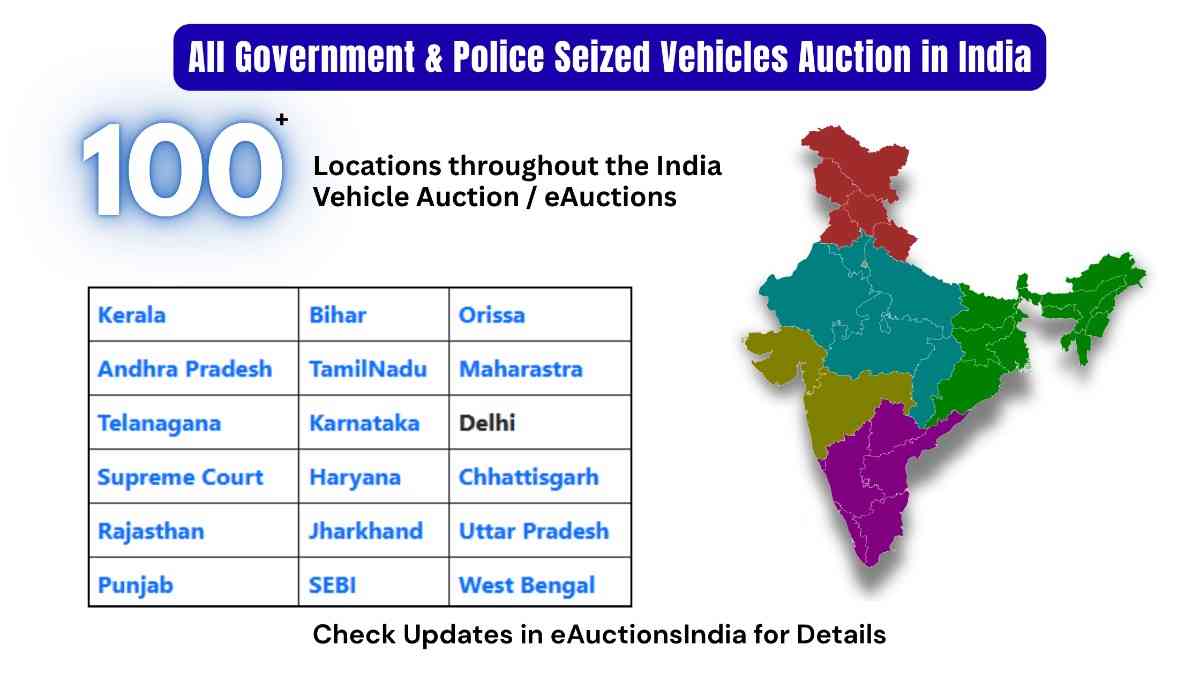
| Kerala | Bihar | Orissa | |
| Andhra Pradesh | TamilNadu | Maharastra | Nashik |
| Telanagana | Karnataka | Delhi | |
| Supreme Court | Haryana | Chhattisgarh | Mahasamund |
| Rajasthan | Jharkhand | Uttar Pradesh | |
| Punjab | SEBI | West Bengal |
Government agencies regularly auction vehicles that are no longer required for official use. These may include:
Police departments also auction vehicles seized under various legal provisions, including traffic violations, criminal investigations, abandoned vehicle cases, and court-directed disposals. Similarly, Customs, GST, Excise, and Enforcement agencies auction confiscated vehicles as per applicable laws and regulations
Traditional public auctions are conducted physically at designated locations. The auction process is governed by specific Acts, departmental rules, government orders, court directions, and auction policies applicable to the concerned department, station, district, state, or region.
The general process includes:
Authorities publish an auction notice containing details such as:
Interested bidders are allowed to inspect the vehicles before the auction. Buyers are advised to carefully verify the vehicle condition, documents, and legal status.
Participants must deposit the prescribed Earnest Money Deposit (EMD) to become eligible for bidding. The EMD acts as a security deposit.
Bidders participate in the auction and place competitive bids. The highest valid bidder is generally declared the successful bidder.
The successful bidder must pay the balance auction amount within the specified period. After completing formalities, vehicle delivery is handed over as per auction conditions.
In recent years, most government departments have shifted to transparent online bidding through eAuction platforms. Popular government-approved platforms include:
Online auctions enable bidders from across India to participate without physically visiting the auction venue.
Most government and police vehicle auctions are open to the general public. Typically, participants must:
Certain auctions may have additional eligibility requirements depending on the department or nature of assets being sold.
The Earnest Money Deposit (EMD) is a mandatory requirement for participation in most auctions.
Key points include:
Before bidding, participants should carefully read all auction documents and conditions. Key factors include:
Government and police seized vehicle auctions in India offer a valuable opportunity to purchase vehicles at potentially attractive prices. Whether conducted through traditional public auctions or online eAuctions on platforms such as MSTC and government portals, bidders should thoroughly inspect vehicles, understand the applicable rules, verify documentation, and carefully review all terms and conditions before participating. Proper research and compliance with auction requirements can help buyers make informed and successful purchases.



