


BLOG DETAILS
India’s once-promising electric mobility startup BluSmart is now facing a major crisis, leading to hundreds of its electric taxis being sold in the used car market at extremely low prices. Several pre-owned electric vehicles, mainly from the company’s fleet in Delhi NCR, are reportedly being sold for around ₹2.5–₹3 lakh, attracting both curiosity and caution among buyers.
Founded by Anmol Singh Jaggi, Puneet Singh Jaggi, and Puneet Goyal, BluSmart launched in 2019 with the vision of creating India’s first fully electric ride-hailing platform. The company quickly gained popularity as a clean mobility alternative to ride-hailing giants like Uber and Ola.
Within four years, BluSmart expanded rapidly across Delhi NCR, building a fleet of more than 8,000 electric cars. The company attracted significant venture capital funding and celebrity investors such as Deepika Padukone and Mahendra Singh Dhoni, which further boosted its reputation in India’s fast-growing EV ecosystem.
However, the company’s growth story began to unravel in early 2025 after an investigation by the Securities and Exchange Board of India (SEBI). The probe reportedly revealed financial mismanagement involving nearly ₹50 crore.
According to the findings, funds that were meant for purchasing electric vehicles and operating the fleet were allegedly diverted for personal use and other non-business expenses through the company’s parent entity, Gensol Engineering Limited. These allegations triggered a major financial crisis within the company.
Following the controversy, BluSmart’s operations reportedly stalled around April 2025. Financial pressure mounted as banks and non-banking finance companies began repossessing vehicles to recover unpaid loans.
Meanwhile, the company’s parent firm entered insolvency proceedings at the National Company Law Tribunal (NCLT). With investors pushing for leadership changes and creditors seeking repayments, the future of BluSmart remains uncertain.
As a result of the crisis, a large number of BluSmart fleet vehicles are now being sold in the secondary market. Reports suggest that around 1,500–2,000 electric cars are currently available for resale.
Most of these vehicles are models such as the Tata Nexon EV and Tata Tiago EV, many of which have already clocked over 2–2.5 lakh kilometers due to extensive use as taxis.
The resale activity is largely centered in areas like Dwarka, where dealers and operators are handling bulk vehicle sales.
The unusually low prices have generated significant interest among buyers. Social media platforms, including YouTube and Instagram, have seen numerous videos showcasing rows of used BluSmart EVs being offered at bargain rates.
However, reactions from buyers are mixed. Some potential buyers walked away disappointed after inspecting the vehicles, citing issues such as worn interiors, damaged seats, and heavily used tires. Others worry about the potential cost of replacing EV batteries, which could significantly increase the overall expense.
Despite concerns, a section of buyers believes the vehicles offer good value for money, especially for local usage. For individuals planning to use the cars for short-distance commuting or personal travel within the city, purchasing an EV at under ₹3 lakh appears attractive.
According to some buyers, the cars can still deliver around 160–170 km of range on a full charge, making them practical for limited daily use.
Industry experts say the BluSmart crisis highlights the risks involved in India’s rapidly evolving EV mobility sector. While the demand for electric vehicles continues to grow, the sustainability of business models, financial transparency, and fleet management remain crucial for long-term success.
The sudden appearance of thousands of used electric taxis in the market also reflects how quickly fortunes can change in the startup ecosystem. What once appeared to be a success story in India’s clean mobility movement is now a cautionary tale for investors, operators, and consumers alike.
BluSmart Faces Fleet Crisis Amid Insolvency, Over 4,000 Leased EVs at Stake
Ride-hailing startup BluSmart Mobility is grappling with a critical challenge as over 4,000 electric vehicles (EVs) leased from Gensol Engineering—more than half of its fleet—remain in limbo due to insolvency proceedings affecting both companies.
The dispute has emerged after Gensol, a renewable energy firm from the same promoter group as BluSmart, entered bankruptcy following defaults on loans totaling ₹663 crore from public financial institutions such as PFC and IREDA. BluSmart, which also entered insolvency proceedings in July, relies heavily on these leased vehicles for its ride-hailing operations.
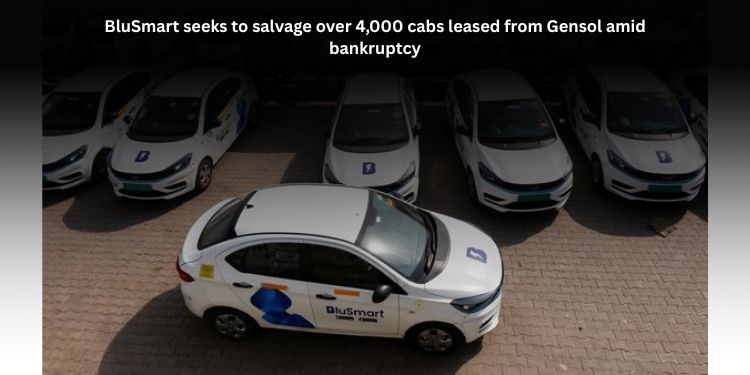
BluSmart’s concern is that Gensol may reassign the leased vehicles to other ride-hailing companies, potentially undermining BluSmart’s ongoing resolution process. If the fleet is redistributed, BluSmart risks losing the operational backbone of its business, leaving only its technology platform intact.
Most of the vehicles were leased through BluSmart Fleet Pvt. Ltd, a subsidiary not directly under BluSmart’s insolvency process. This has complicated matters, as the resolution professional (RP) overseeing BluSmart’s bankruptcy has limited control over assets held within subsidiaries.
Moratorium under IBC: Once a company enters bankruptcy, asset transfers are halted under Section 14 of the Insolvency and Bankruptcy Code (IBC). This prevents Gensol from legally reallocating the cars without BluSmart’s consent.
Lease Rights: The IBC allows a lessee to stop the lessor from leasing assets already under an agreement, provided lease payments are up-to-date. However, BluSmart’s financial strain could make it difficult to maintain timely payments.
Fleet Value Concerns: EVs depreciate quickly, and with over 2,100 vehicles refurbished and ready for operation, delays in resolving the lease situation could erode their market value.
BluSmart’s operations have been on hold since April after regulatory issues and funding delays. Other leasing partners have already moved to reassign vehicles to competitors like Evera Cabs, which has taken over nearly 500 EVs. Meanwhile, the Gensol-owned fleet remains idle, further threatening BluSmart’s ability to maintain its green mobility services.
Industry experts highlight that the resolution of this dispute will be critical for BluSmart’s future:
Business Continuity: Losing access to a large portion of its fleet could halt operations and allow competitors to capture market share.
EV Leadership: BluSmart has positioned itself as a key player in India’s EV ride-hailing sector, and delays or asset redistribution could derail its ambitions.
BluSmart continues to work with its resolution professionals and Gensol’s creditors to prevent unilateral reassignment of its fleet, aiming to safeguard both its operational capacity and the integrity of the insolvency process.
With BluSmart’s sudden shutdown and its lenders moving to auction off thousands of electric cars, there’s a unique opportunity for individuals and businesses to acquire EVs at competitive rates. If you’re considering buying one of these vehicles, here’s everything you need to know.
Operations Suspended – BluSmart, India’s first fully electric cab-hailing service, stopped operations in April 2025 after SEBI barred its promoters for financial irregularities.
Fleet Auction – Over 5,000 Tata Tigor EVs and other vehicles are being repossessed by lenders such as PFC and IREDA and will be sold via auction.
Evera Cabs’ Entry – Rival EV taxi operator Evera Cabs has already picked up 500 BluSmart EVs and is expanding its fleet.
Viral Images – Videos of abandoned BluSmart EVs at charging stations have stirred public curiosity, making these auctions highly anticipated.
Check official and trusted sources where these auctions may be listed:
Government & Institutional Platforms: eAuction India, MSTC Limited, or State-run portals.
Private Auction Platforms: Droom, Mahindra First Choice (eDiig Auctions), Shriram Automall.
Bank & NBFC Auctions: Since lenders like PFC and IREDA are involved, check their websites for notifications.
Register on the Auction Portal – Create your account on the chosen platform.
KYC Documents – PAN, Aadhaar, GST (if applicable), and bank details.
Earnest Money Deposit (EMD) – Pay the refundable deposit (usually 5–10% of reserve price) to become eligible to bid.
Auction Format – Most sales will be through online e-auctions. Some may also have physical inspection days before bidding.
Reserve Price – Each vehicle will have a minimum set price.
Live Bidding – Log in during the auction, monitor bids, and place yours. Stay active till closure.
Winning Bid – If your bid is highest above reserve price, you’ll be declared the winner.
Payment Window – Typically, you’ll need to pay 25% immediately and the balance within 7–15 days.
Forfeiture Risk – Non-payment may result in loss of EMD.
Sale Certificate – Issued once payment is confirmed.
RC & NOC – Collect Registration Certificate and No Objection Certificate from lender/auctioneer.
Ownership Transfer – Apply at your RTO to transfer the vehicle into your name.
Inspect the Car: Many EVs may have been idle for months, so check battery health and mileage.
Factor in Running Costs: Tata Tigor EV batteries may need replacement sooner if not maintained.
Check Charging Options: Ensure you have access to reliable charging infrastructure nearby.
Compare Market Prices: Sometimes auction cars are cheaper, but factor in repair, insurance, and RTO charges.
Stay Alert for Notices: Follow updates on PFC, IREDA, and MSTC portals for official auction schedules.
Bottom Line: BluSmart’s collapse opens a window for EV buyers to acquire electric cabs at attractive prices. With due diligence—especially around battery health and documentation—you could land a solid deal through these auctions..
With the rising popularity of electric vehicles in India, recent reports have sparked interest claiming that BluSmart EV cars—originally priced around ₹10 lakh—are now available via public auction starting from just ₹50,000. For many prospective buyers, this raises the question: Is this offer legitimate, or too good to be true?
BluSmart has shut down or downsized operations.
Its fleet of electric vehicles is being auctioned off.
Starting bid prices are as low as ₹50,000.
The auctions are happening on major platforms like MSTC, Cars24, and Shriram Automall.
Anyone with basic KYC documents can participate.
| Claim | Status | Our Verification |
|---|---|---|
| BluSmart has shut down operations | ❌ False | As of July 2025, BluSmart continues to operate in select cities. No public notice of a full shutdown has been issued. |
| BluSmart EVs are being auctioned | ⚠️ Unverified | While EV auctions are active, there’s no official confirmation that BluSmart’s own fleet is listed. Some vehicles may resemble fleet EVs, but their source remains unclear. |
| Starting bid is ₹50,000 | ✅ True | Some electric vehicles are listed with starting bids of ₹50,000, especially older or high-mileage models. Final prices may vary significantly. |
| Auction platforms include MSTC, Cars24, Shriram Automall | ✅ True | These platforms regularly host auctions for used commercial and passenger EVs from fleet owners, banks, and leasing companies. |
| Anyone can participate with PAN, Aadhaar, etc. | ✅ True | Registration is open to individuals and businesses with basic KYC and, in some cases, a refundable deposit. |
If you're interested in participating, here's a quick breakdown:
Register on the auction site (MSTC, SAMIL, Cars24, etc.) with your PAN, Aadhaar, mobile number, and email.
Pay a refundable deposit if required (typically ₹5,000–₹10,000).
Inspect the vehicles in person at the location before bidding (optional but strongly recommended).
Join the live auction and place bids. Starting price may be ₹50K, but final bids depend on competition and condition.
If you win, you’ll need to:
Pay the full bid amount.
Cover RC transfer charges, insurance, and other applicable fees.
Arrange for pickup or home delivery, if offered.
These vehicles are pre-owned EVs, typically ex-fleet units.
There is no warranty or battery guarantee unless specified.
Some vehicles may be high mileage or may require repairs.
Always confirm ownership transfer feasibility before bidding.
Ask about battery condition, insurance status, and service history if available.
While it's true that used EVs are being auctioned starting from ₹50,000, there is no verified confirmation that BluSmart’s fleet specifically is up for sale at this time. However, similar commercial EVs are regularly auctioned through verified platforms.
The headline figures—₹10 lakh cars starting at ₹50K—are attractive but should be viewed with realistic expectations. Final selling prices may go much higher, depending on demand, model, and condition.



